

Clay Bar and Sealant Service Explained

Run your hand lightly across clean paint and you can tell a lot about a vehicle. If it feels rough, gritty, or less slick than it should, a clay bar and sealant service is often the fix. Washing removes loose dirt, but it does not always remove the bonded contamination that sticks to your paint over time. That contamination affects how your vehicle looks, how it feels, and how well any protection can actually bond to the surface.
For drivers who care about keeping their vehicle sharp without wasting half a day at a shop, this service makes practical sense. It restores smoothness, improves gloss, and adds a layer of protection that helps your paint stand up better to daily driving. It is one of those services that sounds simple, but when it is done properly, the difference is easy to see.
What a clay bar and sealant service actually does
A clay bar treatment is designed to remove contaminants that remain on the paint after a standard wash. Things like rail dust, industrial fallout, road film, brake dust particles, tree sap mist, and overspray can bond to the clear coat. Even if the vehicle looks clean from a few feet away, those contaminants are still there, dulling the finish and leaving the surface rough.
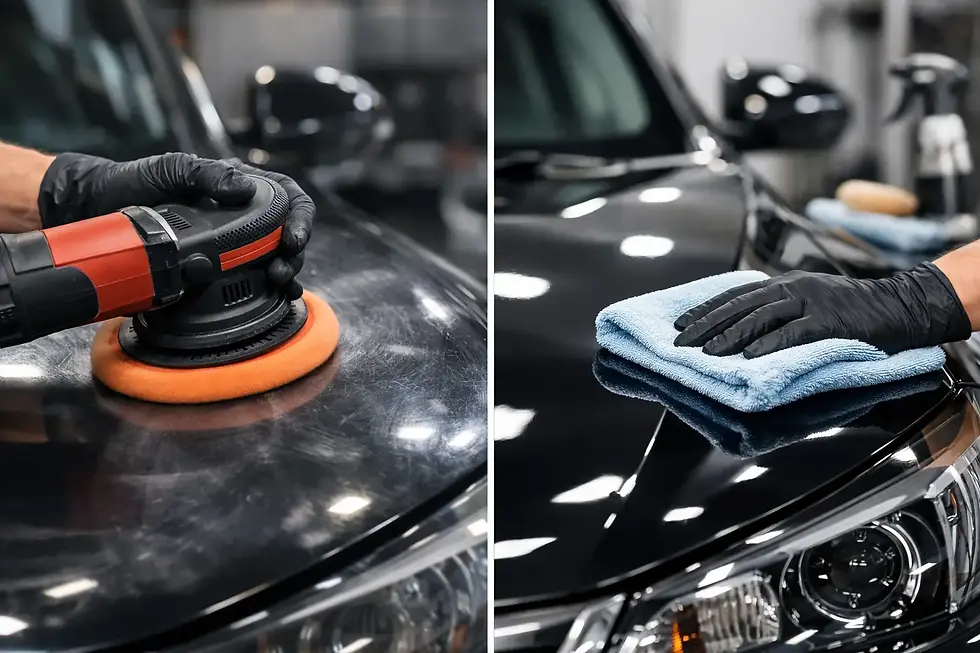
The clay process works by gently lifting those bonded particles off the paint. Once the surface is properly decontaminated, a sealant is applied to protect it. The sealant creates a barrier that helps repel water, dirt, and environmental grime while adding gloss and making routine maintenance easier.
That combination matters. Claying alone removes contamination, but it also leaves the surface needing protection. Sealant alone can add shine, but if the paint is still contaminated underneath, the result will not be as clean or long-lasting as it should be. Doing both together is what gives the service real value.
Why washing alone is not enough
A lot of vehicle owners assume a good wash and wax covers everything. Sometimes it does enough for a newer or well-maintained vehicle, but not always. Paint picks up contamination every time you drive, park near construction, sit through winter road conditions, or leave the vehicle outside for long stretches.
The issue is that bonded contamination does not rinse away like surface dust. It hangs on through rain, car washes, and hand washing. Over time, it can make the finish feel dull and neglected even when the vehicle is being cleaned regularly.
This is especially common for daily drivers, family vehicles, work trucks, and commuter cars. If your vehicle spends time on highways, in parking lots, or near industrial areas, contamination builds faster than most people realize. In those cases, a clay bar and sealant service is less of a luxury and more of a reset for the paint.
Signs your vehicle may need a clay bar and sealant service
The easiest sign is texture. After the vehicle has been washed and dried, lightly run your hand over the paint. If it feels rough instead of slick, contamination is likely present.
You may also notice that water does not sheet or bead well anymore, the paint looks flat in direct sunlight, or the finish seems dirty again shortly after a wash. Sometimes white vehicles look dingy, dark vehicles lose clarity, and metallic paint loses some of its crisp reflection.
There are also seasonal clues. After winter driving, contamination levels usually climb because of road salt, grime, and fallout. In spring and summer, pollen, sap, bug residue, and environmental debris can build up quickly. Fall can bring its own issues if leaves, moisture, and tree fallout sit on the paint for too long.
The difference you can expect after service
The first thing most people notice is how smooth the paint feels. That may sound minor, but it changes the whole impression of the vehicle. Smooth paint reflects light better, looks cleaner, and gives protection products a proper surface to bond to.
You can also expect improved gloss. On lighter colors, the finish often looks brighter and cleaner. On darker colors, reflections become sharper and more defined. If the vehicle has been feeling tired or neglected, this service can bring back a much fresher appearance without stepping into more intensive paint correction.
Then there is the protection side. A quality sealant helps the vehicle stay cleaner longer and makes regular washing easier. Dirt and water release more readily, and the paint has a better layer of defense against the everyday abuse that comes with commuting, weather, and parking outside.
Clay bar vs wax vs ceramic protection
These services get grouped together, but they are not the same.
Clay is a decontamination step. It removes bonded contaminants from the surface. It does not provide lasting protection on its own.
Wax adds a warm shine and some short-term protection, but it generally does not last as long as a modern paint sealant. Some drivers still prefer wax for certain finishes, but for practical, durable protection, sealants are often the better fit.
A sealant is designed for longer-lasting defense and stronger resistance to the elements than traditional wax. It gives the paint a clean, glossy finish and helps with maintenance.
Ceramic products take protection further. They are typically more durable and longer-lasting than a standard sealant, but they also involve a different level of prep, product selection, and investment. Not every vehicle needs a full coating package. Sometimes a clay bar and sealant service is the right middle ground for drivers who want real results without going all the way into long-term coating work.
When this service makes the most sense
This service fits well for vehicles that are regularly driven and parked outdoors, especially if the owner wants better paint feel, better shine, and easier upkeep. It also makes sense before selling a vehicle, after a rough winter, or as part of seasonal maintenance.
For newer vehicles, claying and sealing can help preserve the finish before contamination builds too heavily. For older vehicles, it can noticeably improve appearance as long as the paint is still in decent condition. If the paint also has swirls, oxidation, or deeper defects, it may need correction work in addition to decontamination and protection.
That is where experience matters. Not every rough-looking finish needs the same approach. Sometimes a clay bar and sealant service is exactly the right solution. Other times, it is the first step before a more advanced polishing or coating service.
Why proper technique matters
Clay treatment is not something that should be rushed. If the paint is not washed correctly first, or if the process is done with poor lubrication and pressure control, the surface can be marred. The goal is to safely remove contamination, not create more work.
The same goes for sealant application. Prep matters. Product choice matters. Cure time and surface condition matter. A premium result comes from doing the basics right, taking the time needed, and treating the vehicle like the investment it is.
That hands-on approach is a big reason mobile detailing works so well for busy owners. When the service is brought to your home or location, you get professional care without rearranging your day around a shop visit. For families, commuters, and multi-vehicle households, that convenience is not just nice to have. It makes regular paint care more realistic.
What to expect from a professional mobile service
A proper service should start with a safe exterior wash to remove loose debris before any clay work begins. From there, the paint is decontaminated panel by panel, checked by feel, and prepared for protection. Once the surface is clean and smooth, the sealant is applied to help lock in gloss and improve durability.
The result should not feel rushed or one-size-fits-all. Different vehicles carry different levels of contamination. A garage-kept weekend car is not the same as a daily driver that sees highway miles, winter grime, and constant exposure. Good service accounts for that.
At Jon Boyzzz Mobile Auto Detailing, that standard matters because we know customers are not just paying for shine. They are paying for protection, convenience, and workmanship they can trust. It is all in the details, and when your vehicle is cared for properly, you can see it every time the light hits the paint.
If your paint still looks tired after a wash, the issue may not be dirt. It may be everything stuck to the surface that washing leaves behind, and that is exactly where the right service earns its keep.

Comments