
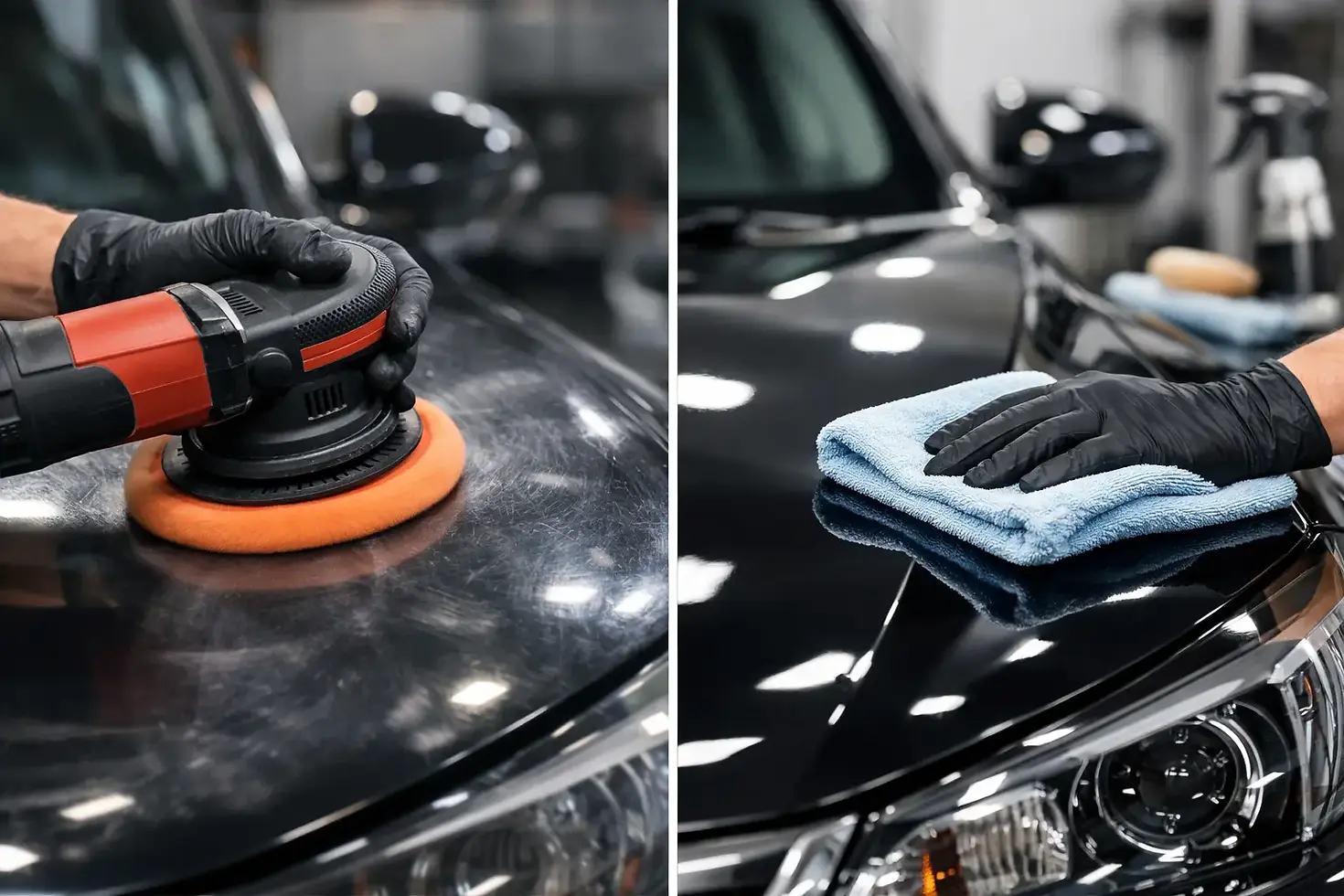
Paint Correction vs Detailing Explained

If your vehicle still looks dull after a wash, you are probably not dealing with a dirt problem anymore. That is where paint correction vs detailing becomes a real question. A lot of owners hear both terms, assume they mean the same thing, and end up booking the wrong service for what their vehicle actually needs.
The short version is simple. Detailing cleans, refreshes, and protects a vehicle. Paint correction removes or reduces defects in the clear coat so the paint looks deeper, glossier, and more even. Both matter, but they solve different problems.
What detailing actually does
Detailing is about thorough cleaning and presentation, inside and out. On the exterior, that usually means a proper wash, wheel cleaning, decontamination, drying, trim care, glass cleaning, and some level of protection like a sealant or coating. On the interior, it can include vacuuming, wipe-downs, steam cleaning, shampooing, stain treatment, odor control, and pet hair removal.
A good detail makes a vehicle feel cared for again. It removes grime, road film, salt, dust, spilled coffee, dog hair, and all the stuff that slowly makes a nice vehicle feel worn down. It also helps protect surfaces from more damage if it is done on a regular schedule.
What detailing does not do is permanently fix paint defects. If you have swirl marks, light scratches, oxidation, water spot etching, or haze in the clear coat, even a very good wash and wax may only make those issues less noticeable for a short time. Once the fillers wear off, the defects are still there.
What paint correction actually does
Paint correction is a machine polishing process that removes a very small amount of clear coat to level out surface defects. That is what allows swirls, fine scratches, oxidation, and dullness to be reduced or eliminated. The result is not just a cleaner vehicle. It is a clearer, sharper, glossier finish.
This is precision work. The paint has to be inspected under proper lighting, the finish has to be decontaminated first, and the technician has to choose the right pad, polish, and approach for that specific vehicle. Some paint systems are soft and correct quickly. Others are harder and need more time. Some defects are safe to improve. Others are too deep to fully remove without taking unnecessary risk.
That is why paint correction is not the same as applying a wax or a glaze. Wax adds protection. Glaze can mask. Correction changes the surface itself.
Paint correction vs detailing: the real difference
The biggest difference in paint correction vs detailing is the goal.
Detailing is maintenance and restoration of cleanliness. Paint correction is defect removal and finish refinement. One is focused on cleaning and protecting. The other is focused on improving the actual condition of the paint.
There is overlap, because proper paint correction starts with detailing steps like washing and decontamination. But they are not interchangeable services. If your interior is full of crumbs, the carpets need shampooing, and the outside has road film and brake dust, detailing is the right move. If your black truck is clean but covered in swirl marks every time the sun hits it, paint correction is the service that addresses that issue.
A simple way to think about it is this: detailing handles dirt and neglect. Paint correction handles defects in the finish.
When detailing is the right choice
Most daily drivers need detailing more often than they need paint correction. If your vehicle is generally in decent shape but needs a reset, detailing usually gives you the best value.
This is especially true for busy families, commuters, and multi-vehicle households. Maybe the inside has winter salt, food crumbs, pet hair, and dust in every crease. Maybe the outside feels rough from contamination and looks flat because it has not had proper protection in months. In cases like that, a strong detail can make a huge difference without stepping into correction work.
Detailing also makes sense as routine care. If you want your vehicle to stay cleaner, look better, and hold value longer, regular maintenance is the smart play. It is easier and more cost-effective to maintain a vehicle than to bring one back after a year or two of neglect.
When paint correction is worth it
Paint correction makes sense when the paint is the main complaint. You wash the vehicle, step back, and it still does not look right. In sunlight or parking lot lighting, you see swirls, random scratches, oxidation, or that washed-out look that kills gloss.
This service is often worth it before applying a ceramic coating. Putting a coating over flawed paint locks in whatever is underneath. If the finish is hazy before protection goes on, it will still be hazy after. Correcting first gives the coating a better surface to preserve.
It is also a smart move if you care about resale, own a darker-colored vehicle, or simply want the paint to look the way it should have looked all along. That said, it is not always about chasing perfection. Sometimes the goal is a major improvement, not a flawless show car finish. That is the practical approach for most daily-driven vehicles.
Why some vehicles need both
A lot of owners do not need to choose one or the other. They need both, just not at the same level or at the same time.
A proper correction service includes prep work that looks a lot like detailing, because the paint must be clean and decontaminated before polishing starts. After correction, the finish should be protected. On top of that, the rest of the vehicle still matters. There is not much point in perfecting the paint if the wheels are caked with brake dust and the interior smells like old gym bags.
That is why the best results often come from combining services based on the vehicle’s real condition. Maybe the paint gets corrected and sealed while the interior gets a refresh. Maybe a neglected SUV needs a full detail now and correction later. It depends on the budget, the vehicle, and how long you plan to keep it.
What paint correction cannot fix
This is where clear expectations matter. Paint correction can improve a lot, but it is not magic.
If a scratch is too deep, if the clear coat has failed, or if there are chips through the paint, polishing will not fully repair that damage. In some cases, correction can make defects less obvious. In others, touch-up paint or body work is the real answer.
A trustworthy service should tell you what is safely achievable and what is not. That matters because your vehicle is an investment, and protecting the finish is more important than overpromising results.
How to decide what your vehicle needs
Start with the problem you notice most. If your vehicle feels dirty, smells stale, looks neglected, or has buildup inside and out, you are probably looking for detailing. If it is clean but still lacks gloss or shows visible swirls and scratches, paint correction is the better fit.
Lighting tells the truth. Look at the paint in direct sun or under bright LEDs. Swirl marks, haze, and fine scratches will show up fast. Then run your hand lightly over the paint after washing. If it feels rough, the surface likely needs decontamination at minimum.
Be honest about how you use the vehicle too. A daily-driven family SUV does not need the same level of correction as a weekend car that is pampered and stored indoors. For many owners, a one-step correction that delivers a strong visual improvement is the sweet spot. It gives the paint more clarity and gloss without the time and cost of chasing every last defect.
The value of proper maintenance after either service
Whether you choose detailing, correction, or both, maintenance is what keeps the results from slipping away.
Bad wash habits are one of the fastest ways to put swirl marks right back into the paint. Letting bird droppings, bug splatter, and road salt sit too long can also undo good work. The same goes for interiors. A deep clean helps, but regular upkeep is what keeps the vehicle feeling fresh.
That is one reason mobile service works so well for busy owners. When a professional can come to your home or workplace, it becomes easier to stay on schedule and protect the investment instead of waiting until the vehicle is far gone. For Niagara drivers dealing with highway miles, winter grime, family messes, and packed calendars, convenience is not a luxury. It is how maintenance actually gets done.
If you are still weighing paint correction vs detailing, do not think of it as a trendy detailing term versus a premium upgrade. Think of it as diagnosis. A vehicle with dirt needs cleaning. A vehicle with damaged-looking paint needs correction. When you match the service to the actual problem, the results make sense, the money is better spent, and the vehicle keeps its value and appearance longer. That is the whole point of quality care - doing the right work at the right time.


Comments