
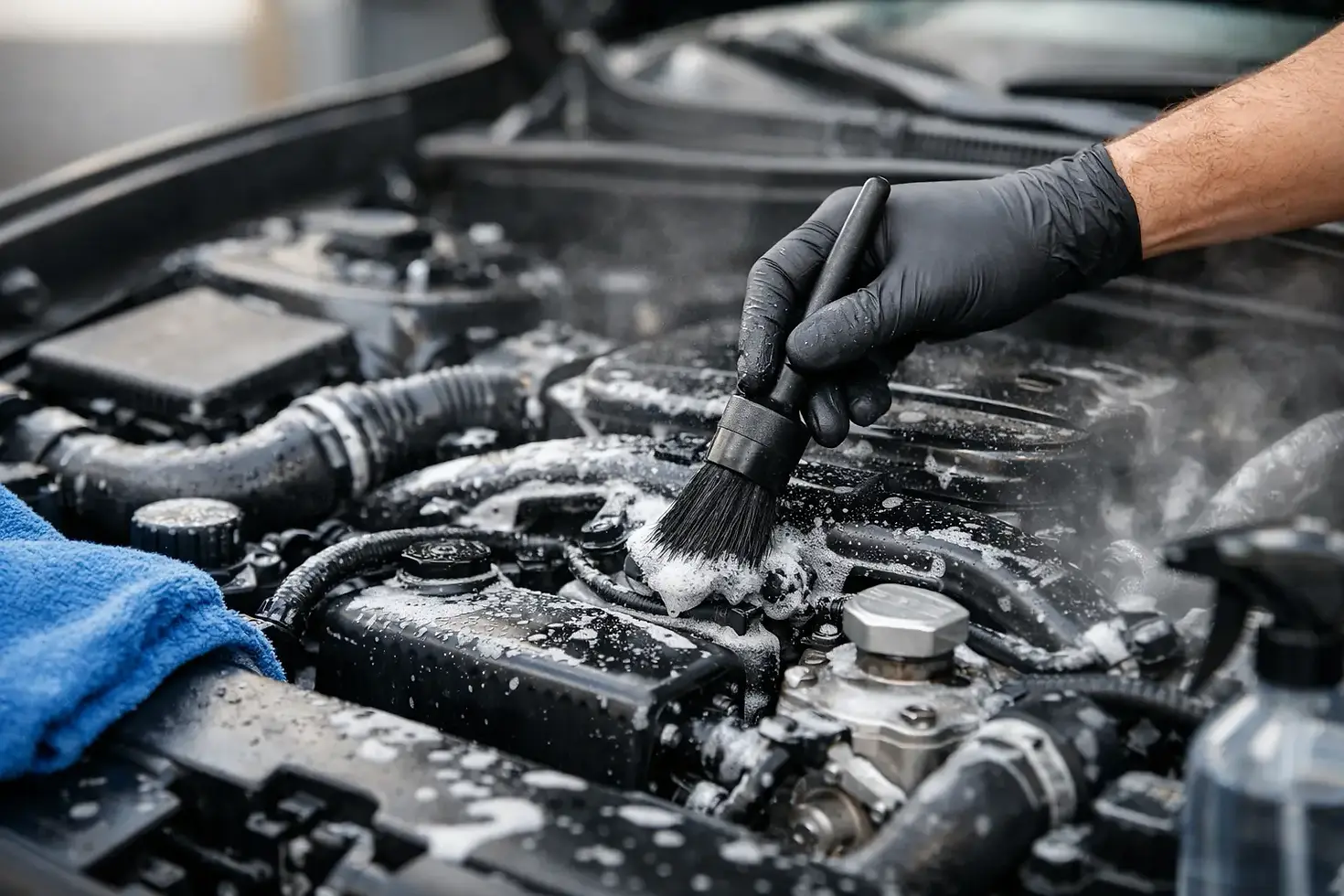
Engine Bay Detailing Service Explained

Pop the hood on a daily driver that has gone a year or two without attention, and the story is usually the same - dust packed into corners, grime around plastics, dried residue near caps and covers, and a generally neglected look that makes the whole vehicle feel older than it is. An engine bay detailing service is designed to clean that area safely and professionally, without treating sensitive components like they can handle the same approach as wheels or fender liners.
For a lot of vehicle owners, the engine bay gets ignored because it feels risky. That hesitation makes sense. Modern engine compartments are packed tighter than ever, with electronics, sensors, connectors, covers, hoses, and insulation all sharing a small space. The goal is not to soak everything and hope for the best. The goal is controlled cleaning, proper product use, and a finished result that looks clean, cared for, and ready to represent the rest of the vehicle properly.
What an engine bay detailing service actually includes
A professional engine bay detailing service is not just a quick spray-down. Done right, it starts with an inspection. That means checking for loose covers, exposed wiring, aftermarket parts, cracked plastic, or signs of existing leaks. If there is fresh oil buildup, rodent damage, or a battery area showing corrosion, those issues matter because detailing should never hide a mechanical problem.
Once the area has been assessed, loose debris is removed by hand or with controlled air. Then a cleaner suited for engine bay materials is applied where needed. Not every surface needs the same strength of product. Painted metal, plastic covers, rubber hoses, and surrounding trim all respond differently, so product choice and dwell time matter.
Agitation is usually the step that separates rushed work from careful work. Brushes, towels, and detail tools are used to break down grime in seams, around caps, along plastic trim, and in hard-to-reach corners. After that, the bay is carefully rinsed or wiped down using a method appropriate for the vehicle and the level of buildup. On some vehicles, minimal moisture is the smarter call. On others, controlled rinsing is perfectly safe when handled properly.
The final stage is drying and dressing. Drying is critical because trapped moisture around connectors, trim edges, and plastic housings can create problems if it is rushed. A quality dressing can then be applied to restore a clean, even finish on plastics and rubber without leaving the engine bay greasy. The result should look fresh and factory-correct, not overly shiny.
Why engine bay detailing service matters
Most people do not book this service because they expect horsepower gains. They book it because a clean engine bay changes how the entire vehicle presents, and because neglected buildup has a way of spreading into bigger cosmetic and maintenance headaches.
A cleaner engine bay makes it easier to spot developing issues. Small leaks, cracked hoses, worn clamps, and fluid residue are much more obvious when they are not buried under layers of dirt. That does not replace mechanical service, but it does make inspection easier for both owners and technicians.
There is also a resale benefit. Buyers notice when a vehicle has been cared for beyond the obvious areas. A clean interior and glossy paint help, but opening the hood and seeing years of grime can undo that impression fast. Engine bay detailing supports the idea that the vehicle has been maintained with pride, which matters when you are protecting value.
For businesses managing fleet vehicles, the same logic applies. Clean, presentable vehicles reflect better on the company, especially when employees drive to customer locations. It is one more detail that reinforces standards.
When professional cleaning is the better choice
There is a reason many people leave this job to a pro. The risk is usually not in cleaning the engine bay at all. The risk is in cleaning it aggressively, using the wrong products, or applying water where it should not go.
A professional approach is especially helpful if your vehicle has heavy grime, visible residue, aging plastic components, aftermarket wiring, or simply a tight engine compartment that does not leave much room for error. If you drive a newer vehicle with sensitive electronics, or an older one with brittle clips and covers, technique matters just as much as the products being used.
Mobile service makes this even easier for busy owners. Instead of planning a trip to a shop and rearranging your day, the work can be done where the vehicle already is. That convenience matters for families, professionals, and multi-vehicle households that do not have time to sit around waiting. It is one of the reasons customers across the Niagara Region choose mobile detailing in the first place - we will come to you, and the work still gets done to a professional standard.
What safe engine bay cleaning looks like
There is a big difference between confident work and careless work. Safe engine bay detailing starts with understanding what should be protected, what can be cleaned directly, and how much moisture the situation calls for.
That means avoiding the old habit of blasting the whole compartment with high pressure. It means using the right cleaners in the right concentrations. It means controlling runoff, working around electrical areas carefully, and drying thoroughly before the job is considered finished.
It also means knowing when not to push further. Some buildup points to an active mechanical issue, and no detailing service should pretend otherwise. If there is a fresh leak or a damaged component, the honest move is to clean responsibly without masking the problem.
That kind of restraint is part of quality workmanship. It protects the vehicle, and it protects the customer from a service that looks good for one day but creates avoidable trouble later.
How often should you book an engine bay detailing service?
It depends on how you use the vehicle and where it spends most of its time. A commuter that sees highway miles year-round will collect a different kind of contamination than a weekend vehicle or a garage-kept truck. Winter driving, road salt, dust, and under-hood moisture all affect buildup.
For many owners, one or two engine bay details per year is enough to keep things in solid shape. If the vehicle is being prepared for sale, shown to buyers, or brought back from a period of neglect, an engine bay detail makes sense right away. For fleet vehicles or work trucks that represent a business, more frequent maintenance can be worth it simply for appearance and inspection visibility.
The right interval is not about chasing perfection. It is about preventing buildup from getting so heavy that the job becomes harder, riskier, and less effective.
What to expect from the finished result
A proper engine bay detail should not look artificial. You want clean surfaces, more even color on plastics and rubber, less dust and grease in visible areas, and an overall appearance that matches a well-maintained vehicle. You do not want puddled dressing, greasy residue, or a wet look that attracts fresh dust right away.
The best results are balanced. The bay should look refreshed, not overdone. Components should be clean enough to inspect. The visual improvement should be immediate when the hood opens, but the finish should still feel appropriate for the vehicle.
That matters because engine bay detailing is not about show-car theatrics for most customers. It is about care, presentation, and protecting a major investment with the same attention you would expect on the paint, interior, and wheels.
Is engine bay detailing worth it?
If you plan to keep your vehicle looking sharp, maintain its value, and stay ahead of small issues, yes, it is worth it. Not because it is flashy, but because it handles one of the most overlooked areas on the vehicle in a careful, practical way.
At Jon Boyzzz Mobile Auto Detailing, that mindset is simple. It is all in the details. A clean engine bay will not fix a mechanical problem, but it will make your vehicle feel better cared for, easier to inspect, and stronger in presentation from top to bottom.
If the rest of your vehicle gets professional attention, the space under the hood should not be the part that gets left behind. A well-kept engine bay says the whole vehicle matters, and that is exactly the standard worth keeping.


Comments