
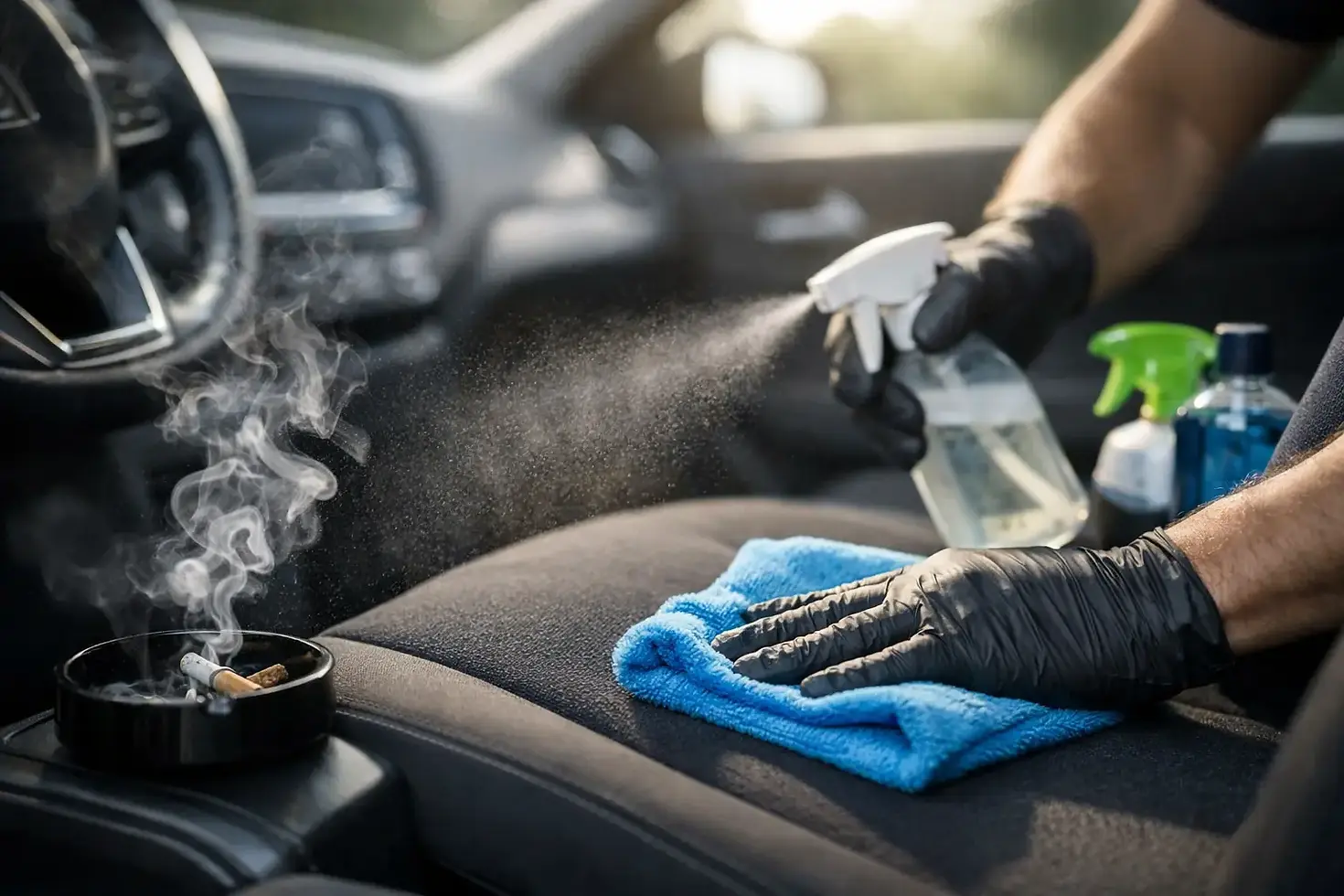
How to Remove Car Smoke Smell for Good

That stale smoke odor in a vehicle is not just sitting in the air. If you are figuring out how to remove car smoke smell, the real job is pulling nicotine and tar residue out of fabric, leather, plastic, carpet, and the HVAC system. If you only cover it with an air freshener, it almost always comes back the moment the cabin heats up.
Smoke is one of the toughest interior odors because it clings to everything. Headliner fabric, seat foam, floor mats, door panels, and even the cabin filter can all hold onto it. That is why a quick wipe-down or a hanging scent card rarely fixes the problem for more than a day or two.
Why smoke smell stays in a car
Cigarette and cigar smoke leave behind oily residue. That film settles on hard surfaces and sinks into soft materials. On a warm day, those residues release odor back into the cabin, which is why some vehicles smell worse in the afternoon than they do in the morning.
The ventilation system also plays a big role. If smoke was used in the vehicle regularly, particles can collect in the cabin air filter and inside the ductwork. Every time you turn on the fan, you can end up pushing that smell right back through the interior.
This is also why the answer to how to remove car smoke smell depends on how bad the contamination is. A car with one or two smoking incidents is very different from a daily smoker vehicle that has gone months or years without a proper interior detail.
How to remove car smoke smell step by step
The best approach is a full interior reset. You need to remove loose debris first, then clean every surface that holds residue, and finally deal with the air system and odor treatment.
Start by removing ash and dry debris
Take out floor mats, empty the ashtray, and vacuum the entire interior thoroughly. Get into seat rails, under the seats, inside cupholders, and along the edges of the carpet. If ash or debris is left behind, it keeps feeding the odor problem.
Do not skip the trunk. In many vehicles, interior air moves through the whole cabin, and smoke smell can settle into trunk liners and cargo mats too.
Clean every hard surface, not just the obvious ones
Wipe down the dashboard, center console, door panels, steering wheel, shifter, interior glass, and all plastic trim with a proper interior-safe cleaner. Smoke film often leaves a yellowish or dull residue, especially on light-colored trim and the inside of the windshield.
Glass matters more than people think. If the inside of your windshield hazes up quickly after cleaning, smoke residue is often the reason. Until that film is gone, the cabin can still carry the smell.
Use the right product for the material. Aggressive cleaners can dry out leather, stain sensitive trim, or leave surfaces slick. This is one of those areas where stronger is not always better.
Shampoo fabric and carpet where odor hides deep
If the car has cloth seats, carpet, and fabric floor mats, they need more than a surface spray. A proper shampoo or extraction process helps lift embedded smoke residue from the fibers. Pay close attention to seat bottoms, seat backs, carpets under the pedals, and the rear footwells.
If the vehicle has absorbed heavy smoke for a long time, the seat foam underneath the fabric may also be holding odor. That is where light DIY cleaning can hit its limit. You may improve the smell, but not fully remove it, because the source is deeper than the surface material.
Do not ignore the headliner
The headliner is one of the biggest smoke traps in the whole vehicle. It is overhead, porous, and constantly exposed. But it is also delicate. If you soak it or scrub too aggressively, you can loosen the adhesive and cause sagging.
The safer move is light cleaning with a microfiber towel and an interior fabric-safe product. Work gently. This is a clean-and-lift process, not a deep saturation process.
Treat leather carefully
Leather does not absorb smoke the same way cloth does, but it still collects residue on the surface and in seams. Clean it with a leather-safe cleaner and follow with a proper conditioner if needed. If the seats are perforated, be careful not to flood the holes with product.
Leather interiors often look easier to fix, and sometimes they are. But if the smoker drove with the windows up for years, even leather vehicles can still need serious odor treatment.
The HVAC system can keep bringing the smell back
One of the most overlooked parts of how to remove car smoke smell is the ventilation system. You can clean the cabin top to bottom, but if the filter and ducts still smell, the odor returns when the fan comes on.
Replace the cabin air filter
If your vehicle has a cabin air filter, replace it. This is one of the simplest and most effective steps you can take. A contaminated filter can hold smoke particles and spread them every time the system runs.
Clean the vent intake and run the system
After replacing the filter, run the fan on high and cycle through heat, fresh air, and recirculation modes. An odor-neutralizing HVAC treatment can help reduce lingering smell in the ducts. Results vary depending on how long the smoking went on and how much buildup is inside the system.
If the smell is strongest right when the air starts blowing, that is a sign the HVAC side needs more attention.
Odor removal vs odor masking
There is a big difference between making a car smell stronger and making it smell clean. Air fresheners, vent clips, and fragrance bombs usually mask the issue. They might be useful after the odor source is removed, but they do not solve the actual problem on their own.
True odor removal means cleaning residue first. After that, you can use a neutralizing treatment to handle what is left behind in the air and materials. If you reverse that order, you are usually wasting time and product.
When DIY works and when it does not
If the smoke smell is mild, a careful do-it-yourself cleanup can make a big difference. A recently purchased used car with light odor, for example, may respond well to vacuuming, surface cleaning, carpet shampooing, and a cabin filter replacement.
If the odor is heavy, old, or baked in from years of use, the process gets harder fast. You may be dealing with contaminated foam, stubborn headliner residue, and deep-set HVAC odor. At that point, professional interior detailing is often the more efficient move because the tools, cleaners, and process are built for deeper correction.
That is especially true if you are trying to protect resale value. A smoke-smelling interior can turn buyers away quickly, and shortcuts tend to show up the moment someone opens the door.
How long does it take to remove car smoke smell?
It depends on the level of contamination. Mild smoke odor may improve in a single deep-cleaning session. Moderate to heavy odor can take multiple stages, especially if extraction, steam cleaning, and follow-up odor treatment are needed.
Weather also matters. Warm temperatures can reactivate residue and make the smell more noticeable, which is frustrating but useful. If the odor returns on a hot day, it usually means there is still residue in the vehicle somewhere.
How to keep the smell from coming back
Once the odor is removed, prevention is straightforward. Do not smoke in the vehicle, replace the cabin air filter on schedule, and clean interior surfaces before residue builds up again. If there was a heavy smoke history, periodic interior maintenance helps keep trace odor from resurfacing.
For families, commuters, and multi-vehicle households, this is where consistent detailing makes a difference. It is easier to maintain a clean cabin than to correct one that has been ignored for months.
If you want real progress on how to remove car smoke smell, think like a detailer. Go after the source, not the symptom. Clean every material that holds residue, deal with the vents, and be honest about whether the smell is light, moderate, or severe. A clean interior should smell neutral, not covered up - and when the work is done right, opening the door feels like a fresh start instead of a reminder of the last owner.

Comments